
Industrial Automation
Industrial automation with PLC, DCS and SCADA for new plants, retrofits and legacy migration
An industrial automation service that designs, supplies and commissions PLC, DCS and SCADA systems, drives and field instrument integration, and migrates legacy control systems, for process, power, pharma and manufacturing plants.
Last updated:
What the system does
Plants need control systems that run reliably for decades, yet many still depend on controllers and software that are no longer supported. Both new projects and modernisation need engineers who can work from field instrument to SCADA screen.
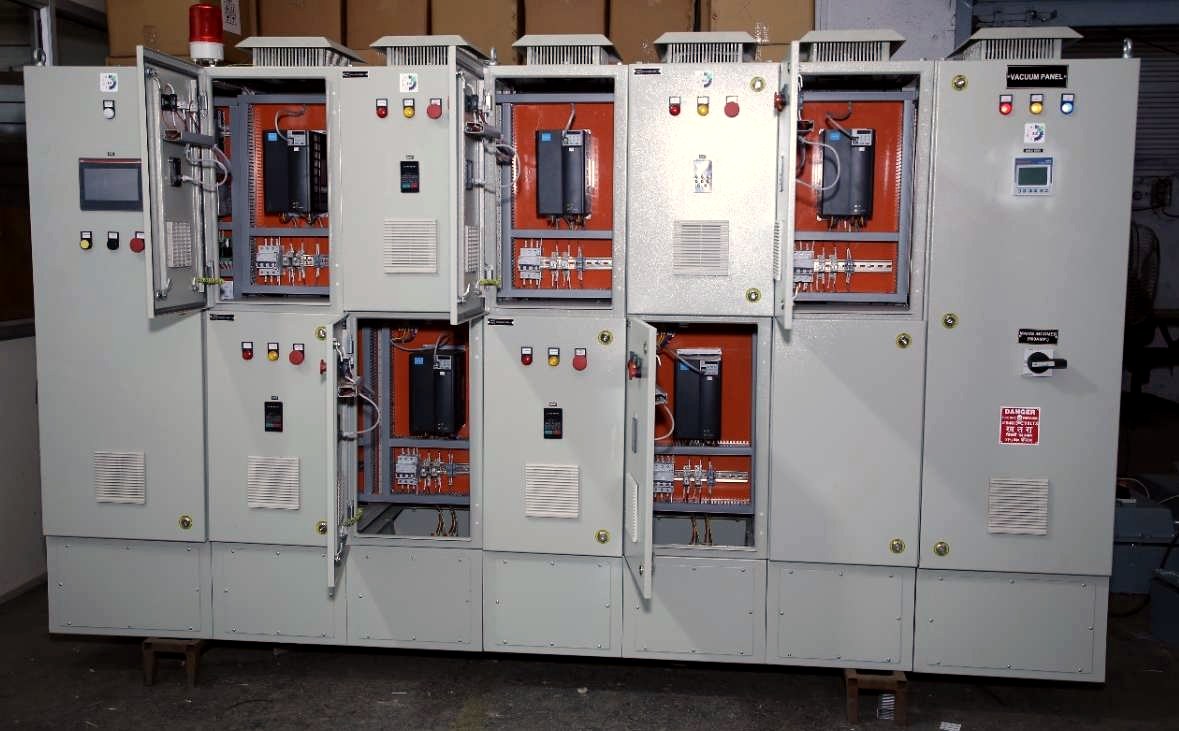
We take industrial automation from requirement study through design, panel manufacturing, instrument mounting and integration, DCS or PLC implementation, testing and handover. We supply PLCs, HMIs, VFDs, soft starters, motion control drives and servos, and build redundant systems where the process demands it.
Our engineering experience since 2009 covers power plants up to 500 MW, boilers, steel, automotive, paper, textile, wind power, fertilisers, terminals and water treatment, from a single boiler to assembly lines centralised on one server.
- 01
PLC and SCADA design and commissioning
Control philosophy, PLC programming, SCADA graphics, alarms and historian, tested before site and commissioned on site.
- 02
DCS implementation
DCS engineering and implementation for process and power plants, including redundant controllers and networks.
- 03
Field instrument integration
Instrument mounting and integration of field instruments with control panel PLCs and SCADA, with loop checks before commissioning.
- 04
Drives and motion control
Supply and integration of VFDs, soft starters, motion control drives and servos, including MV drive integration.
- 05
Production line automation and traceability
Assembly lines connected to a central server with historian and reports, so production, downtime and traceability data no longer sit in separate machine HMIs.
- 06
Legacy system migration
Migration of obsolete PLC, DCS and SCADA systems to supported platforms, planned to keep the plant running.
- 07
Retrofits and redundant systems
Retrofits of existing control systems and redundant controller, server and network architectures for critical processes.
- 08
IoT and digitalisation
IoT connectivity, remote monitoring and digitalisation consultancy to bring plant data to web and mobile users.
Across the automation layers
What the solution does at each layer of your facility.
L1 · Field
Mounts and integrates field instruments, drives and actuators, with cabling, termination and loop checks.
L2 · Control
Designs and programs PLCs and DCS controllers in panels built in our own manufacturing units.
L3 · Supervision
Builds SCADA and HMI graphics, alarms and historian for operators.
L4 · Enterprise
Connects plant data to IoT, web and mobile access and reporting.
Scope and specification
| Item | Scope |
|---|---|
| Control systems | PLC, DCS, SCADA, HMI |
| Drives | VFDs, soft starters, motion control drives and servos, MV drive integration |
| Field work | Instrument mounting, field instrument integration, cabling, termination, loop check |
| Production lines | Assembly-line centralisation and traceability, sequencing, interlocks, line HMIs |
| Utilities and process plants | Boilers, furnaces, crushing plants, water and effluent treatment, bag filters, gas handling |
| Architectures | Standalone, networked and redundant systems |
| Networks | Managed switches, media converters, time synchronisation, redundant industrial Ethernet |
| Modernisation | Retrofits and migration from legacy systems |
| Connectivity | IoT solutions, remote web monitoring |
| Protocols | Profinet, EtherNet/IP, Modbus TCP, OPC UA, RS-485 |
| Documentation | HLD/LLD, electrical and control design, panel drawings, test records |
| Delivery | Testing, commissioning and handover |
What it means for operations
- Control systems that are supportedLegacy migration removes dependence on obsolete hardware and software.
- One engineering team end to endDesign, panels, field integration and commissioning come from the same team.
- Lines and utilities in one viewOperators see production lines and the utilities that feed them on the same SCADA system, with one alarm list.
- Redundancy where it mattersCritical processes run on redundant controllers and networks.
- Plant data available beyond the control roomIoT and web access put production and equipment data in front of managers.
Frequently asked questions
What does industrial automation cover at AMADSAS?
Field instruments, drives, control panels, PLC, DCS and SCADA systems, industrial networks and the reporting above them. We cover design, panel manufacturing, installation, commissioning and support, for production lines and for the utilities that serve them.
Can we start with one machine or one line?
Yes. Standalone systems are part of our normal scope. We define the network, tag naming and protocols at the start so that later lines and utilities can join the same system.
Can you migrate our legacy control system without a long shutdown?
Migration is planned around your production calendar, with I/O mapped, logic converted and tested before site work. Cutover is usually staged by area or unit to use planned shutdowns.
Which PLC and DCS platforms do you work with?
Our engineers work across the major PLC and DCS platforms, and we are an authorised partner for ABB and Inovance among others. The platform is chosen with you during design based on your standards and existing installed base.
What kinds of plants have you automated?
Our project history includes thermal and hydro power plants up to 500 MW, boilers, steel, paper, textile, fertiliser, wind power, terminal automation and water and effluent treatment plants.
Do you provide documentation and training at handover?
Yes. Handover includes design documents, panel drawings, test and commissioning records and operator training, with AMC support available afterwards.
Let’s start by understanding your facility
Send us a short description of the site and its current systems, and an engineer will come back with clear next steps.